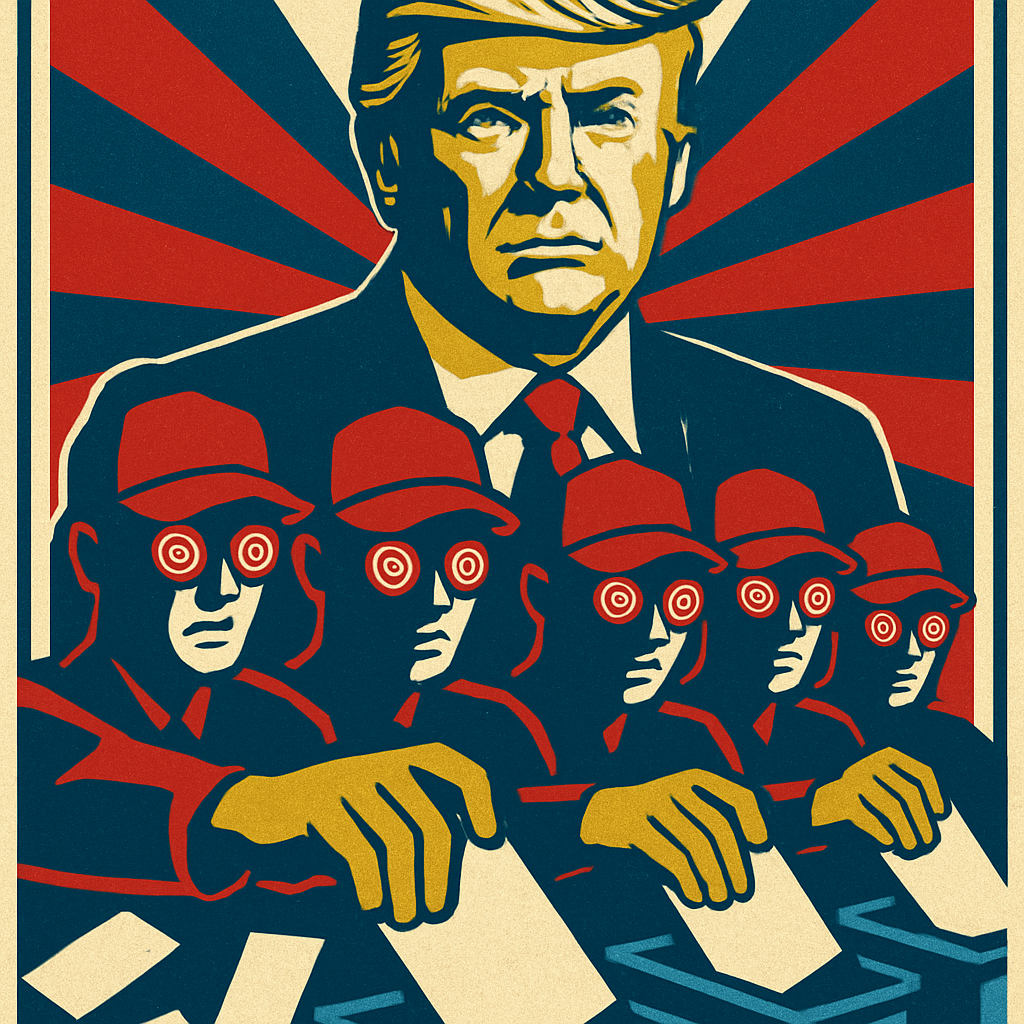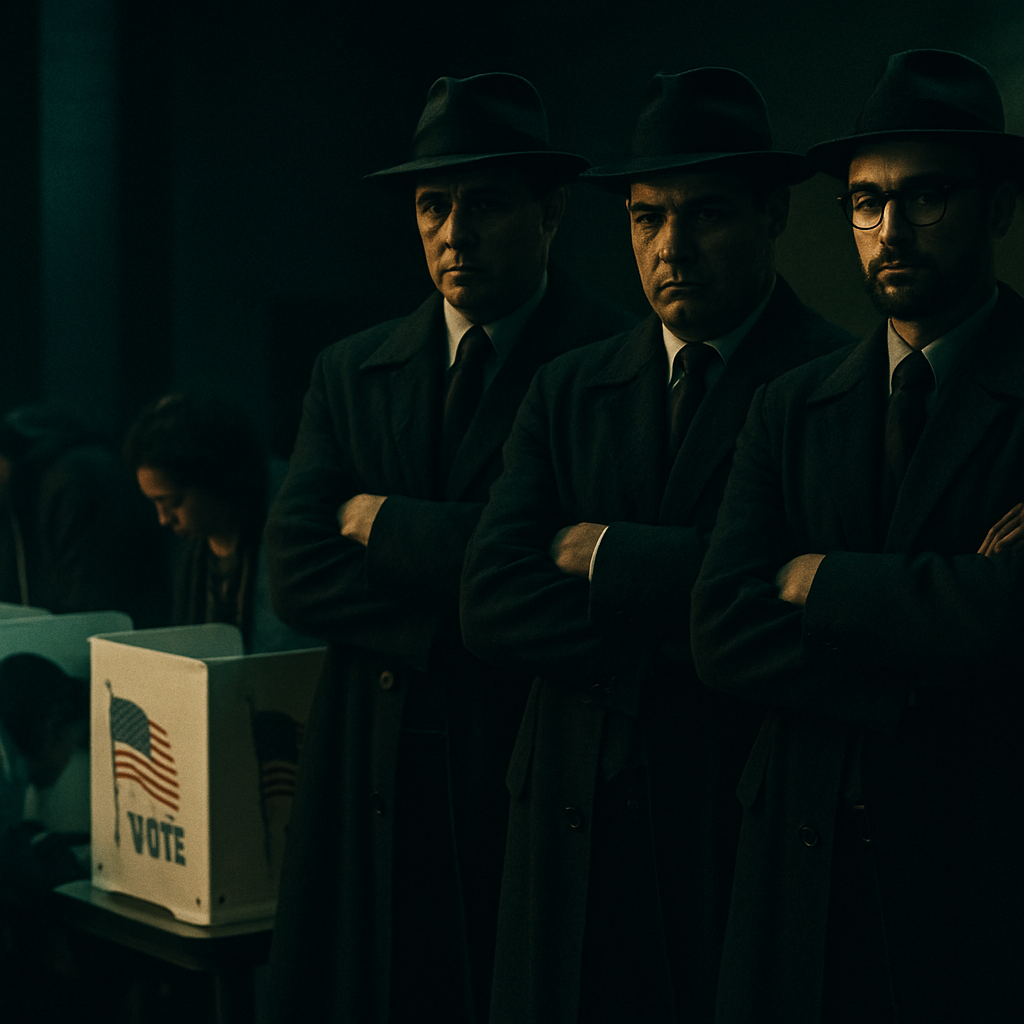
The Justice Department intends to send roughly 1,000 election monitors to polling places for the November midterms, Assistant Attorney General Harmeet K. Dhillon said in a Bloomberg interview on Aug. 17. She described the deployment as "probably going to be a historic number for a Republican administration."
The scale is the story. So is the arithmetic behind it.
The Civil Rights Division, which runs the monitoring program, does not have 1,000 people to send. Roughly 70% of the division's career attorneys, about 250 lawyers, left through resignations, early retirements or the administration's deferred resignation program between the start of the second Trump term and the end of May 2025, as the division's mission was redirected toward the president's executive orders. Dhillon has since hired replacements, but the division remains a fraction of the size of the force she has announced.
To reach 1,000, a DOJ spokesperson told CBS News, the department will recruit federal employees to volunteer, drawing from DOJ staff including U.S. Attorney's Offices around the country. That is a meaningful departure. Election monitoring has historically been performed by Voting Section attorneys with specific training in the Voting Rights Act, the National Voter Registration Act, the Help America Vote Act and the Americans with Disabilities Act. Dhillon has said the training for the new monitors would be the same used by past administrations. The department has not released the curriculum, the selection criteria, or a list of which offices the volunteers will come from.
What monitors can and cannot do
Federal election monitoring is not new, and it is not inherently improper. The Civil Rights Division has sent staff to polling places for decades to assess compliance with federal voting laws, and the program has generally proceeded without incident.
The legal constraints are narrow and specific. DOJ monitors do not administer elections, do not determine voter eligibility and do not direct local election officials. They observe and report. Federal observers are a distinct category, recruited and supervised by the Office of Personnel Management, and they can only be assigned by federal court order under Section 3(a) of the Voting Rights Act since the Supreme Court's 2013 Shelby County decision knocked out the coverage formula the department previously relied on. As of the department's most recent public accounting, court-ordered observers were authorized in only a handful of subdivisions in Alaska, Louisiana, New Jersey and Rhode Island.
Federal law also bars DOJ monitors, like anyone else, from intimidating voters or interfering with the ability to cast a ballot, and from engaging in political activity while on duty. The Campaign Legal Center, which published guidance for election officials in August, notes that prior administrations established behavioral standards specifically designed to keep monitors from inadvertently intimidating voters or confusing poll workers.
Those guardrails exist regardless of who is deployed. Whether a volunteer force assembled at scale in under three months can be trained to observe them is the open question, and the department has not addressed it publicly.
The evidence problem
Dhillon has paired the monitoring announcement with claims she has not substantiated.
"In the states that have cooperated with us, there are hundreds of thousands of dead people on the voter rolls, and there are tens of thousands of people who are not citizens on the voter rolls," she told Bloomberg. She did not identify the states, did not provide supporting data, and acknowledged the department must conduct further verification before determining whether anyone voted illegally.
She also accused unnamed election officials of knowingly allowing noncitizens to remain registered. "This is a federal crime," she said, without naming the officials or citing the statute.
The department's own litigation record cuts against the premise. DOJ has filed 31 federal lawsuits against states and the District of Columbia seeking unredacted statewide voter registration databases, including sensitive fields such as Social Security and driver's license numbers, under Title III of the Civil Rights Act of 1960. It has lost all 23 cases in which a district court has ruled. The Sixth Circuit rejected the department's position, and the full appeals court declined to rehear the Michigan case. Dhillon and Attorney General Todd Blanche have both said a Supreme Court petition is a possibility.
Separately, the Department of Homeland Security has sought access to state voter information for criminal and immigration enforcement, a use unrelated to voting rights compliance.
Why states are asking questions
The suspicion from state officials is not abstract. When Dhillon announced monitors for the summer primaries, covering 15 jurisdictions across Arizona, Massachusetts, Michigan, Minnesota, New Hampshire and Virginia, she said the department was sending them "into cities and counties where there may have been some problems in the recent elections," and referred to "jurisdictions where you know I've got personal knowledge of there being problems in the past."
She did not say what the problems were. Arizona Secretary of State Adrian Fontes, whose state saw monitors sent to Maricopa, Apache and Pima counties, filed a public records request with the Civil Rights Division seeking the basis for the deployment, saying DOJ had never told his office what the alleged problems were. Fontes is also litigating against DOJ over his refusal to hand over voter records containing personal identifying information. A federal judge sided with him in April, and the department is appealing.
The contrast with prior practice is documented. In 2024, the Biden-era Justice Department sent monitors to four Arizona counties and described the purpose as monitoring "for compliance with federal civil rights laws." It did not allege fraud.
The numbers so far
For the Aug. 18 primaries, the department said it sent approximately four Civil Rights Division attorneys to Miami-Dade County, Florida, and two to Laramie County, Wyoming. Across the primary season, DOJ says it has deployed more than 75 monitors across five states and more than 200 polling locations.
The department's comparison to past cycles is difficult to evaluate. Its Aug. 18 press release states that "during the 2022 midterms the DOJ sent monitors to nine states," while NOTUS reported that the Biden administration sent monitors to 22 states in the 2022 midterms and 27 states in the 2024 presidential election. CBS News reported the department monitored 86 jurisdictions across 27 states in 2024. The release does not specify whether its nine-state figure covers primaries, the general election, or both, and DOJ did not clarify.
A full list of November monitoring locations is expected after the primaries conclude. Election Day is Nov. 3.
The wider context
The monitoring expansion is one piece of a broader federal posture toward the midterms. The department sent letters to all 50 states and the District of Columbia raising the prospect of criminal charges against election officials over alleged noncitizen voting. President Trump has continued to assert, without evidence, that the 2020 election he lost was stolen, and the FBI has opened investigations related to the 2020 results in Fulton County, Georgia, and Arizona. The SAVE America Act, which would require documentary proof of citizenship to register for federal elections and photo ID at the polls, passed the House but is stalled in the Senate, where Majority Leader John Thune has said it is effectively dead. Trump has not ruled out declaring an election-security emergency before November. Dhillon said she has not been part of those discussions.
Dhillon's framing is that none of this is unusual. "This is just something that DOJ does," she said.
The parts that are unusual are specific and checkable: a monitoring force roughly an order of magnitude larger than any recent deployment, staffed by volunteers rather than voting-rights specialists, justified by fraud findings the department has not produced and by a legal theory federal judges have rejected 23 times without exception.