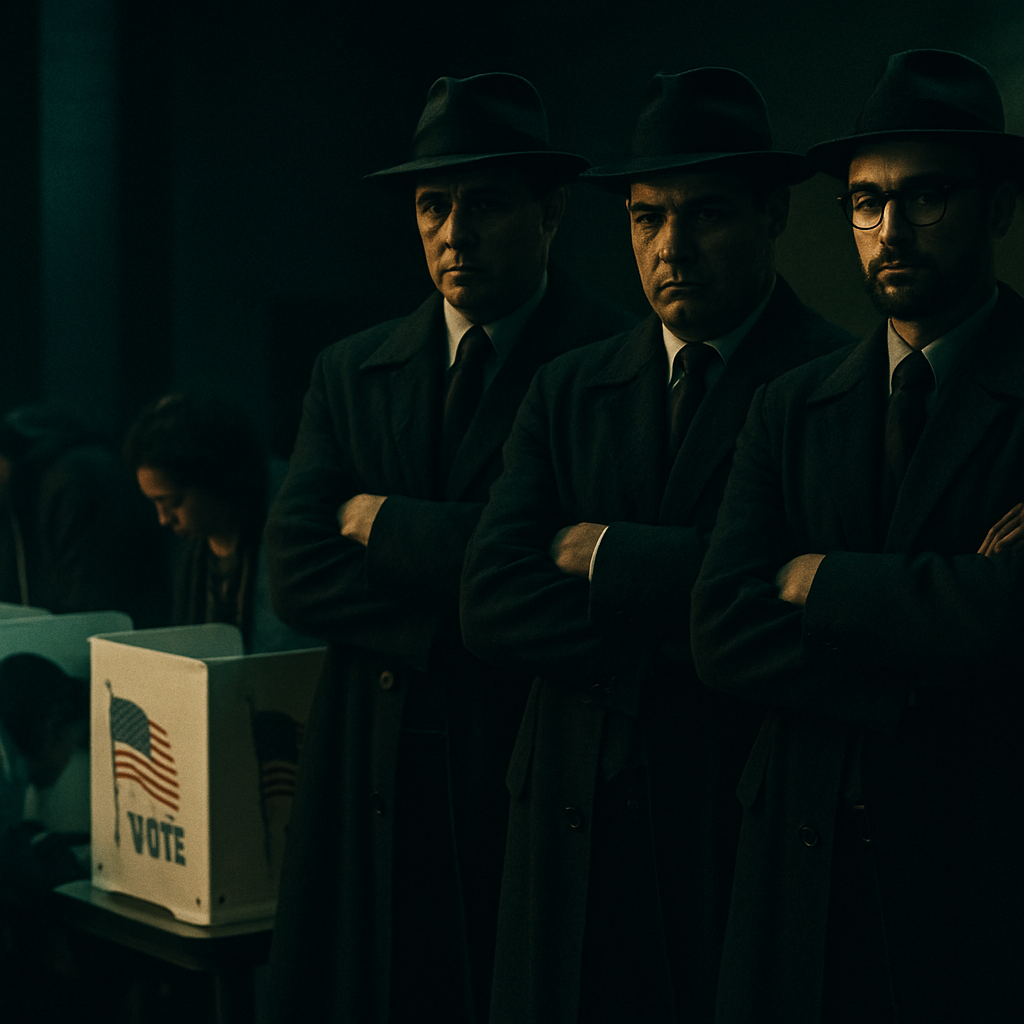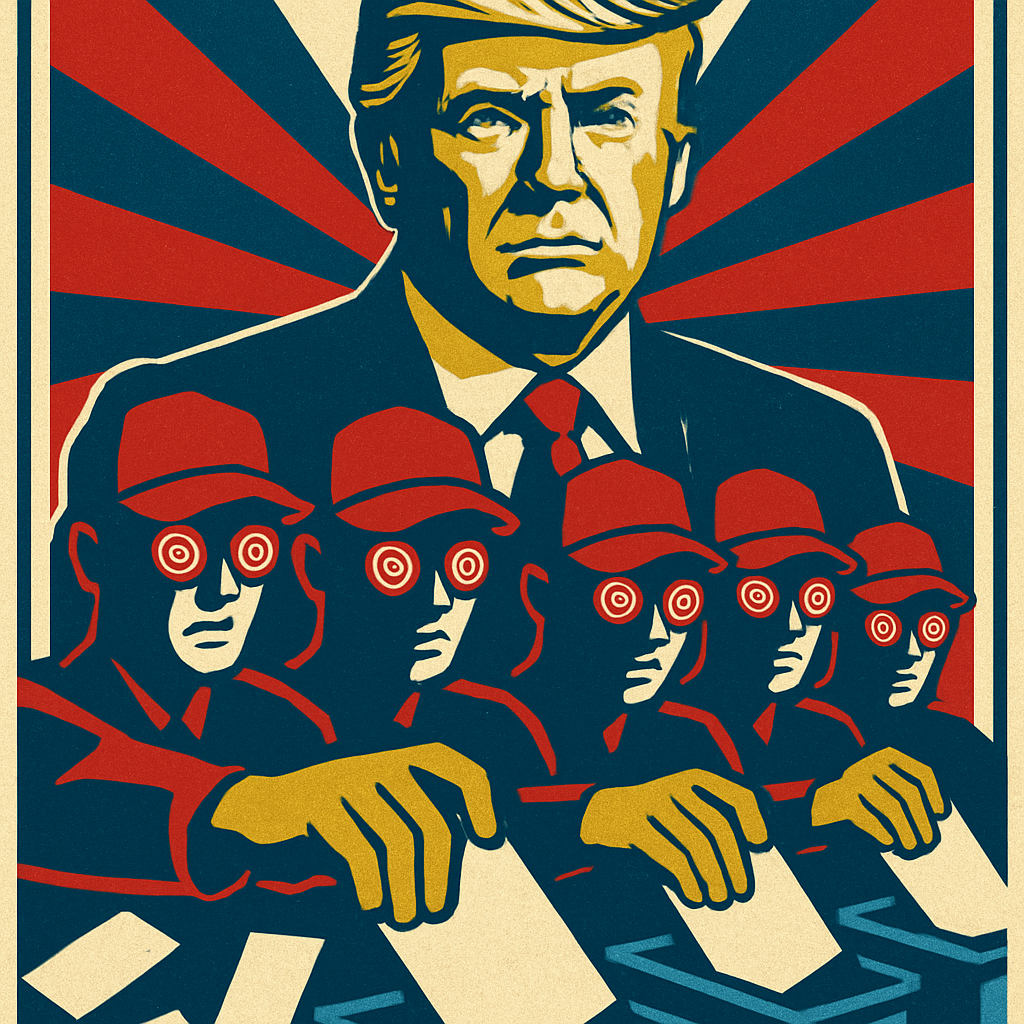
Trump Won't Rule Out 'National Security Emergency' to Restrict Voting in Midterms
President Donald Trump declined to rule out declaring a "national security emergency for elections" — a legal mechanism that does not exist — when a far-right media host urged him to bypass the Senate and impose sweeping voting restrictions ahead of the 2026 midterms.
The exchange came during an interview aired August 10 on Real America's Voice's America's Top Ten Countdown, hosted by Wayne Allyn Root, a longtime Trump ally known for promoting election conspiracy theories.
"Let me put an idea in your head, okay? You have the right to declare a national security emergency for elections," Root told the president, arguing that Senate Republicans lack the votes to pass Trump's SAVE America Act. "If you do this in the next month, we will get photo ID, proof of citizenship and a limit to mail-in ballots. You don't even need the Senate's vote."
Trump's response: "Let me just say that stranger things have happened, OK? I'll leave it at that."
A claim with no legal foundation
Root told Trump that under the Supreme Court's 1983 decision in INS v. Chadha, an emergency declaration "can't be challenged" in court and can only be overturned by a two-thirds vote of both houses of Congress. That is not what the case says.
Chadha struck down the one-house legislative veto; it said nothing about shielding emergency declarations from judicial review. Courts have repeatedly reviewed — and blocked — presidential actions taken under emergency and executive authority, including two of Trump's own election-related executive orders. The decision's practical effect on the National Emergencies Act was to require Congress to terminate an emergency by joint resolution, which a president can veto — but that is a limit on congressional termination, not a grant of unreviewable power.
More fundamentally, the Constitution's Elections Clause assigns authority over the "times, places and manner" of federal elections to state legislatures, subject to override by Congress. It grants the president no role. No statute triggered by an emergency declaration confers power over election administration, and no president in American history has declared a national emergency to run, alter, or restrict an election.
Trump has already tested the limits of executive authority over elections twice: an executive order on voting signed last year and a separate order targeting mail-in ballots earlier this year. Federal courts blocked both.
Contradicting his own denial
The remarks contradict Trump's earlier public position. When reports circulated of a draft executive order on elections "sitting on his desk," Trump distanced himself from the idea, saying he was not considering a national emergency ahead of the midterms.
But pressure from his media allies has been building for months. Media Matters, which has tracked the campaign for nearly a year, reports that figures including Steve Bannon, John Solomon, and Cleta Mitchell have promoted an emergency declaration — some framing it as a response to a national security threat from China — that would supposedly let Trump "make the rules" and deploy the National Guard to oversee the midterms. Root pitched the same plan to Bannon weeks before putting it directly to the president.
In the same interview, Trump pressed the Senate to pass the SAVE America Act, claiming voter ID is "about an 89% issue with the overall population" — a figure he did not source — and repeated his unsupported assertion that mail-in ballots are "so corrupt." Last month, in a primetime address promising new evidence of election fraud, the president instead rehashed claims about the 2020 election that have been repeatedly debunked in courts and audits.
'Zero reason to not take Trump at his word'
The response from observers was blunt. "There is zero reason to not take Trump at his word that he and his team are planning something alarming to disrupt the midterms," CNN anchor Jake Tapper said.
Democracy Docket, the voting rights news outlet founded by election lawyer Marc Elias, called Root's proposal "nonsensical and unconstitutional" and noted that Trump's refusal to disavow it "could be an attempt to normalize such a declaration." The president has previously said he wanted to "nationalize" voting and that he regretted not ordering the military to seize ballots and voting machines after his 2020 loss.
Root's pitch came with a deadline: he urged Trump to act "in the next month," roughly 90 days before voters go to the polls in November. Whether the president follows through or simply lets the threat linger, election officials in both parties now head into the midterms with the White House openly entertaining the idea that the rules could be rewritten by decree.
The answer to how far Trump will go may ultimately rest where his previous attempts have ended: in the courts. Both of his election executive orders died there. An emergency declaration aimed at the midterms would almost certainly meet the same wall of litigation — but this time, with an election clock running.