Sworn In Saturday, Breaking Promises by Monday: Todd Blanche's First Days as AG
It took Todd Blanche less than one business day to show the senators who confirmed him exactly what their promises were worth.
On Saturday, August 8, the Senate confirmed Blanche as attorney general by a 50-49 vote — the narrowest possible margin, secured only after weeks of stalemate and a series of concessions extracted by skeptical Republicans. On Monday evening, hours after his swearing-in ceremony, his Justice Department's Office of Legal Counsel published a memo arguing that President Trump can claim executive privilege over communications with his "private advisers" — people who hold no government office — so long as the communications were confidential and related to presidential "decisionmaking." The memo also appears to extend privilege to communications between the president's "direct advisers" and civilians.
Translation: if Democrats retake the House in November and start issuing subpoenas, the White House now has a fresh legal theory for refusing to answer. Senate Minority Leader Chuck Schumer said the memo shows Trump is "petrified of the questions a Democratic Congress will demand answers to."
The promises that bought his confirmation
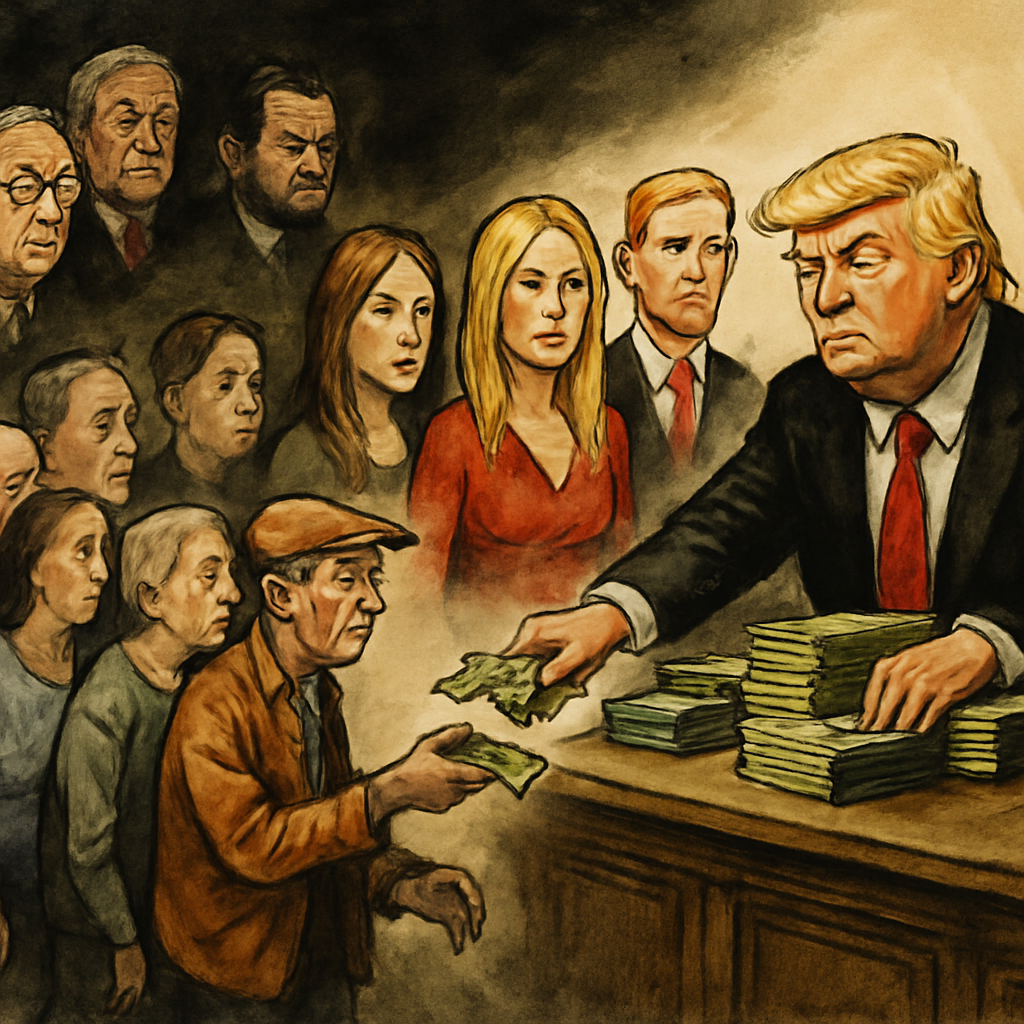
Blanche's confirmation nearly collapsed over the settlement he engineered of Trump's $10 billion lawsuit against the IRS — a deal that granted Trump and his family immunity from tax audits and created a nearly $1.8 billion "Anti-Weaponization Fund" to compensate the president's allies, including January 6 rioters. A federal judge found Trump's underlying lawsuit was filed for an "improper purpose."
To salvage the nomination, Blanche put it in writing: the fund was dead, and the audit-immunity provision would be reined in. That written promise won over Senators John Cornyn and Thom Tillis and unlocked the committee vote. Senator Bill Cassidy — the decisive fiftieth vote — extracted his own price, demanding Blanche finally meet with Epstein survivors, and reasoned that Blanche's history as Trump's criminal defense lawyer might make him "more effective at pushing back on the president's demands."
That theory lasted a weekend. The senators bargained for a Justice Department that would restrain the president's self-protection; they got one that expanded it before the confirmation flowers wilted. Susan Collins and Lisa Murkowski — the only Republicans to vote no — needed no such education. Murkowski had warned the country needs an attorney general "who will check the worst impulses of this administration."
The Maxwell playbook: they were warned
None of this should have surprised a single senator, because Blanche's defining act at the Justice Department followed exactly the same pattern: quiet action benefiting the powerful, followed by explanations that don't withstand scrutiny, followed by stonewalling.
In July 2025, as deputy attorney general, Blanche did something no second-ranking DOJ official ordinarily does: he personally interviewed Ghislaine Maxwell — Jeffrey Epstein's convicted accomplice, serving 20 years for sex trafficking of a minor and related crimes — over two days in Tallahassee. The meetings came one week after public reporting that Maxwell had assembled a birthday book for Epstein containing a personal note from Trump. During the interviews, per Senator Sheldon Whitehouse's account, Maxwell spoke favorably of the president.
Roughly one week later, Maxwell was transferred from FCI Tallahassee to the minimum-security Federal Prison Camp Bryan in Texas — even though Bureau of Prisons policy requires people convicted of sex offenses to be housed at low-security facilities at a minimum, making a camp placement extraordinary without a special waiver. Whitehouse wrote that the transfer "has the appearance of a political favor orchestrated by Acting Attorney General Blanche."
What happened when Congress asked for the paperwork? Nothing. Whitehouse's August 2025 document demand went unanswered for more than ten months. A November 2025 FOIA request filed by Whitehouse, Richard Blumenthal, and Adam Schiff — an indignity no sitting senator should need — also went nowhere. And in May 2026, with Blanche running the department, BOP quietly issued a policy change purporting to give the attorney general personal, essentially unreviewable authority to "designate or redesignate the place of a prisoner's imprisonment" — retroactively legitimizing the Maxwell arrangement and extending the same power over every federal inmate.
At his confirmation hearing, Senator Cory Booker pressed Blanche on the Maxwell meetings and rendered the verdict most bluntly: "This isn't a confirmation hearing. This is more of a performance review. And clearly when it comes to the treatment of Epstein victims, when it comes to politically motivated prosecutions... you failed."
"I'm his lawyer"
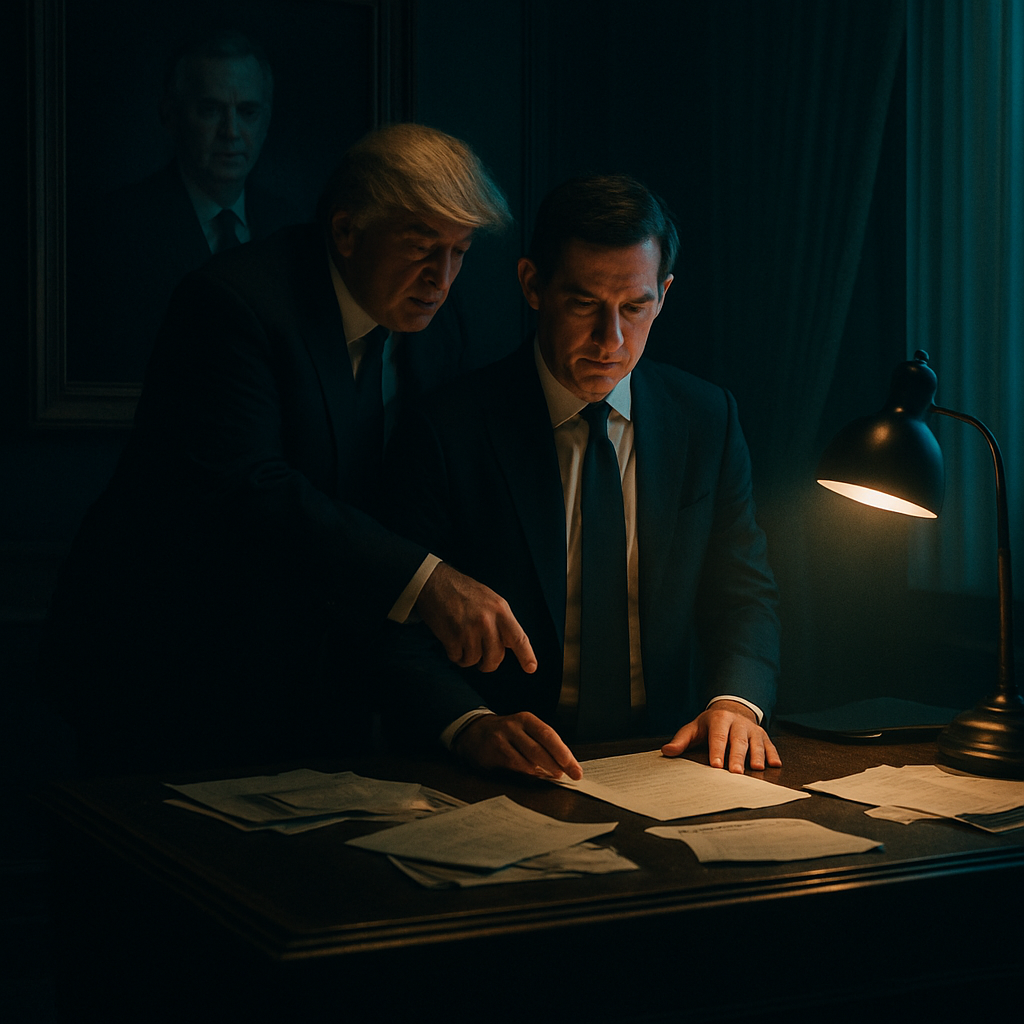
The through line is not hidden. Asked at his hearing about his relationship with the president, Blanche answered "I'm his lawyer" — present tense — before correcting himself. It was the truest thing said all day.
Consider the record as one continuous performance of that role. As Trump's private attorney, Blanche defended him in the Manhattan hush money trial and both federal criminal cases. As deputy attorney general, he led the Epstein files release — former AG Pam Bondi confirmed he "was leading the Epstein matter... from the beginning" — and personally handled the one witness whose account matters most to his former client, who was then rewarded with a camp transfer the department still refuses to explain. As acting attorney general, he engineered a settlement giving his former client tax-audit immunity and a $1.8 billion fund for his allies. And as confirmed attorney general — within hours — he equipped his former client with a new executive-privilege shield against the congressional oversight likely coming next year.
Senators Cornyn, Tillis, and Cassidy believed written assurances would bind a man whose entire public career is now organized around one client's legal exposure. The OLC memo is Blanche's answer. The Maxwell documents — now more than a year overdue — are the rest of it.
The question Congress should be asking is no longer whether Todd Blanche will use the Justice Department to protect Donald Trump. He has answered that repeatedly, most recently on his first night in office. The question is what else has been promised, to whom, and what it will cost the public to find out.
This is an opinion piece of PoliticalCorruption.org. It is based on the documented public record cited throughout.