Trump's Defense Lawyer Runs the DOJ — and He's the One Who Moved Ghislaine Maxwell
Todd Blanche spent 2023 and 2024 as Donald Trump's personal criminal defense lawyer — lead counsel in the Manhattan hush money trial and Trump's defender in both federal criminal cases. Asked at his confirmation hearing this July whether he and the president are friends, Blanche answered, "I'm his lawyer," before correcting himself: he was his lawyer.
That lawyer now runs the Justice Department. And along the way — in one of the most brazen sequences of the second Trump term — he personally sat down with Ghislaine Maxwell, the convicted sex trafficker who was Jeffrey Epstein's closest accomplice, and within roughly a week of that meeting she was transferred to a minimum-security prison camp that Bureau of Prisons policy says someone with her record should never occupy.
The week that tells the whole story
The timeline is not disputed, and it is damning.
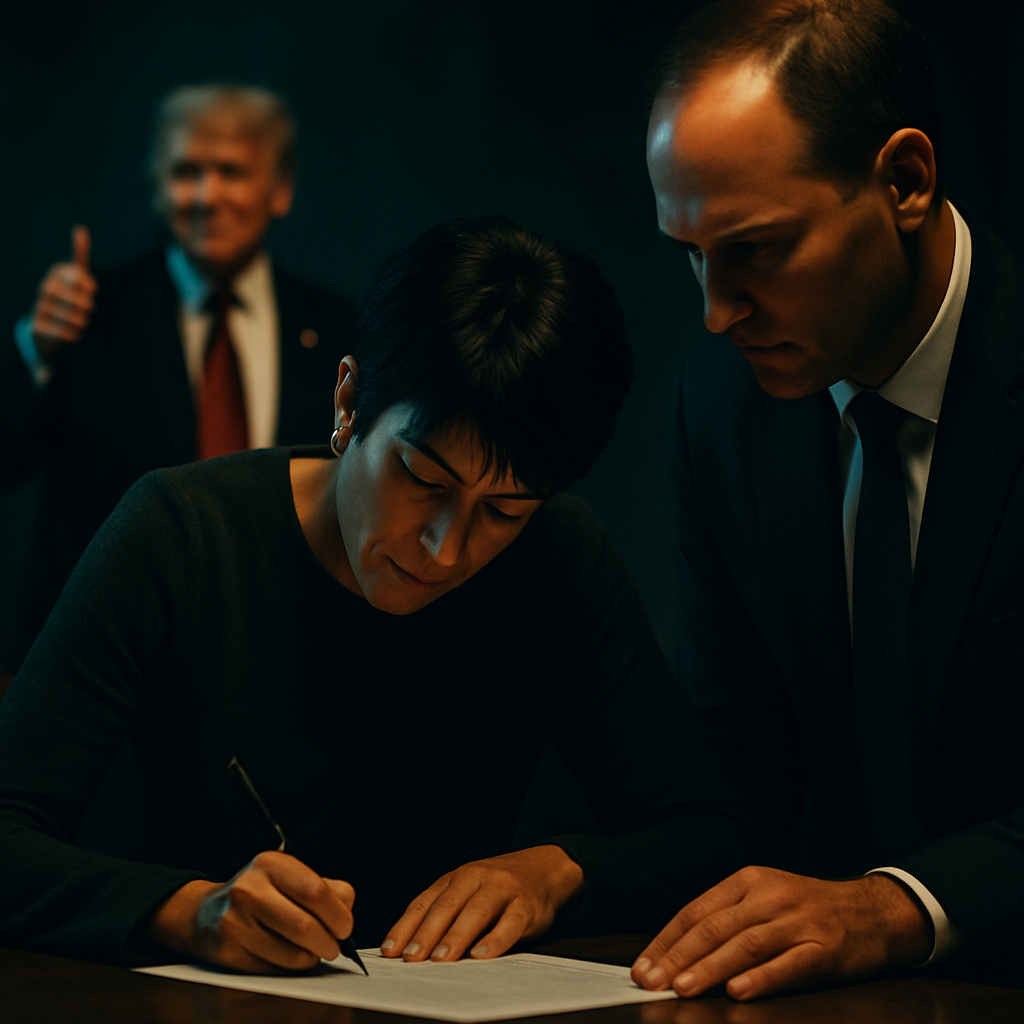
In July 2025, news reports revealed that Maxwell had assembled a birthday book for Jeffrey Epstein that included a personal note from Donald Trump. One week later, on July 24 and 25, 2025, Blanche — then deputy attorney general, the second-ranking official in the department — traveled to Tallahassee and personally interviewed Maxwell over two days. Sitting deputy attorneys general do not conduct inmate interviews. That is what career prosecutors are for. Blanche did it himself.
During those meetings, as Senator Sheldon Whitehouse later documented, Maxwell spoke favorably of President Trump.
Roughly one week after that, Maxwell was moved from FCI Tallahassee federal prison, to Federal Prison Camp Bryan in Texas — a minimum-security camp, the least restrictive setting in the federal system.
Convicted in 2021 of sex trafficking of a minor, transporting a minor to participate in illegal sex acts, and three related conspiracy counts, Maxwell is serving a 20-year sentence. Bureau of Prisons policy requires individuals convicted of sex offenses to be placed at low-security facilities at a minimum — not minimum-security camps. A BOP administrator would normally have to approve a waiver for a transfer this unusual.
So: birthday book with Trump's note becomes public. The president's former personal lawyer flies down for two days of private conversation. Maxwell says nice things about the president. Days later, she's in a camp. Senator Whitehouse put it plainly: the transfer "has the appearance of a political favor orchestrated by Acting Attorney General Blanche."
The explanation that explains nothing
Blanche's defense, offered in a December 2025 television appearance, was that Maxwell faced "numerous threats against her life" amid intense publicity, and the move was for her safety.
Senator Cory Booker called it an "absurdity" that the Justice Department's chief expression of concern for anyone touched by the Epstein horror was for the safety and comfort of the woman convicted of procuring Epstein's victims. At Blanche's confirmation hearing, Booker was more direct still: "This isn't a confirmation hearing. This is more of a performance review. And clearly when it comes to the treatment of Epstein victims... you failed."
If the safety explanation were true, it would be trivially easy to document. Threat assessments are paperwork. Transfer justifications are paperwork. The federal prison system runs on paperwork. Which brings us to the most telling fact of all.
Ten months of stonewalling
On August 7, 2025, Senator Whitehouse demanded all documents related to Maxwell's redesignation and transfer, with a response deadline of August 28, 2025. The Justice Department never answered. In November 2025, Whitehouse and Senators Richard Blumenthal and Adam Schiff resorted to filing Freedom of Information Act requests — a step no sitting senator should need to take to conduct basic oversight. The department did not comply with those either.
As of Whitehouse's renewed demand in June 2026 — more than ten months after his first letter — the Justice Department had produced nothing.
The Bureau of Prisons, for its part, said nothing publicly about the transfer for almost a year. When it finally spoke, in a June 2026 social media post, it insisted that "no preference, special treatment, or political influence played any role." Whitehouse's response was the obvious one: if that's true, hand over the documents. They still haven't.
An innocent bureaucratic decision does not require ten months of silence, ignored subpoena-adjacent letters, and stonewalled FOIA requests. Cover-ups do.
Then they changed the rules
If the Maxwell transfer was a one-off embarrassment, what happened next converted it into policy.
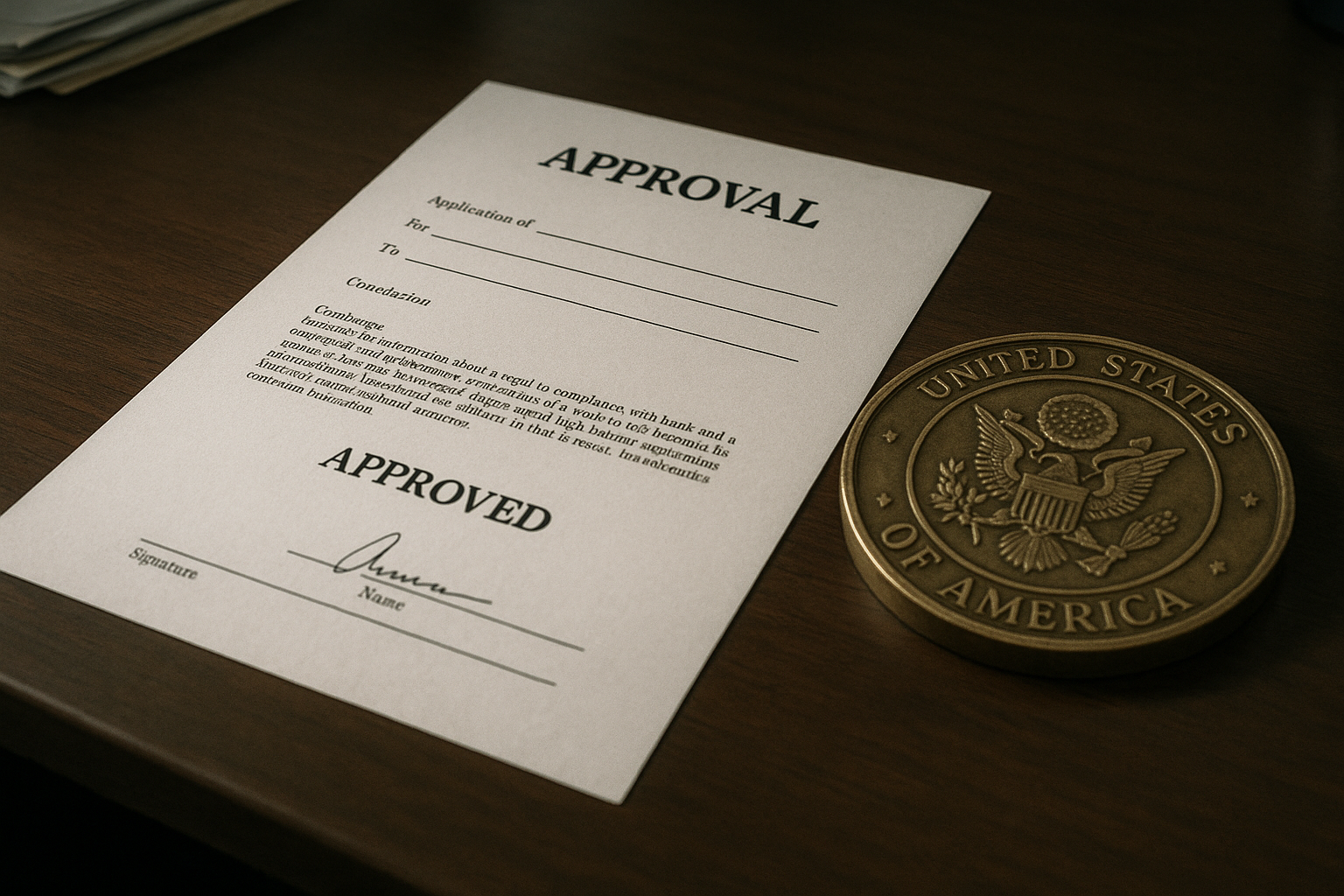
On May 6, 2026 — with Blanche now running the department as acting attorney general after Trump fired Pam Bondi — the Bureau of Prisons quietly issued Change Notice 3 to Program Statement 5100.08, its inmate-classification bible. The little-noticed revision purports to give the attorney general personal authority to "designate or redesignate the place of a prisoner's imprisonment" — at will. The new language doesn't even require the attorney general to consider BOP's recommendation. The bureau "may provide relevant information."
Read that again. After the president's former defense lawyer engineered a policy-defying transfer for the one living person who knows the most about Jeffrey Epstein's operation — a person whose testimony could implicate or exonerate the president — the department rewrote its rules so that the attorney general can now lawfully do for any prisoner what was done for Maxwell. Whitehouse warned that Congress needs to know "whether BOP changed its policy so Acting Attorney General Blanche can continue to fulfill a political deal with Ms. Maxwell in exchange for her comments about President Trump."
This is what institutional corruption looks like in its mature form: first you break the rule, then you change the rule so it was never broken.
A conflict of interest with a Cabinet seat
None of this happened in a vacuum. Former Attorney General Bondi confirmed to House investigators that Blanche "was leading the Epstein matter and the release of everything from the beginning." The man in charge of deciding what the public learns about Jeffrey Epstein — whose files touch the president Blanche spent two years defending in criminal court — is the same man who interviewed Epstein's accomplice and presided over her upgrade to a prison camp.
Senators Durbin and Whitehouse sought commitments in July 2025 that the department would not dangle a pardon or commutation in front of Maxwell in exchange for cooperation with the White House's political goals. The department declined to make that simple promise in any binding way.
And on August 8, 2026 — four days ago — the Senate confirmed Blanche as attorney general by a 50-49 vote, the narrowest of margins. Two Republicans, Susan Collins and Lisa Murkowski, joined every Democrat in opposition. Murkowski said the country needs an attorney general "who will check the worst impulses of this administration." Fifty of their colleagues disagreed, and the personal lawyer became the nation's chief law enforcement officer with the Maxwell questions still unanswered.
The stakes
The attorney general of the United States is supposed to represent the people, not the president. Todd Blanche's own words at his hearing — "I'm his lawyer" — were the most honest moment of the proceedings.
A Justice Department that moves a convicted child sex trafficker to a camp days after she praises the president, refuses for a year to explain why, and then grants its own leader unreviewable power to move any federal prisoner anywhere is not describing security procedures. It is describing leverage — held over, or extended to, the one witness whose silence or cooperation matters most to the man in the Oval Office.
Congress has asked the right questions. The deadline on Senator Whitehouse's latest letter — July 10, 2026 — has now passed like all the others. Until the documents come out, the public is entitled to draw the inference the department's conduct invites: this was a favor, it was paid for in kind words about the president, and the bill may not yet be fully settled.
This is an opinion piece of PoliticalCorruption.org. It is based on the documented public record cited throughout.